
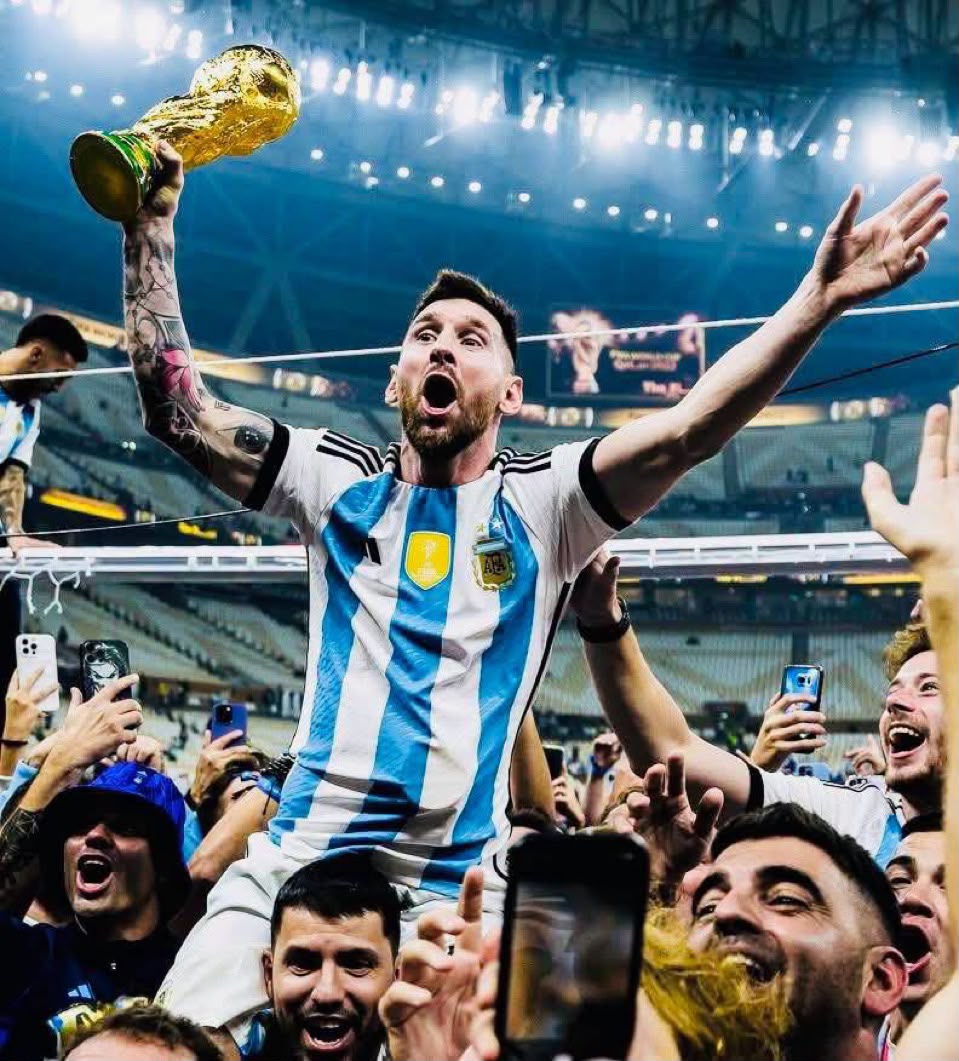
And separately, the banner displayed by Argentine players after their semi-final victory over England expressing support for Argentina's claim to the Falkland Islands.
The banner that was flown comes under Article 13, which covers offensive behaviour and violations of the principles of fair play. The exact wording of the provision states that member associations, clubs, players and officials must respect the Laws of the Game and comply with the principles of fair play, loyalty and integrity.
Sub-provision c of the same article states that anyone who uses a sports event for demonstrations of a non-sporting nature may be subject to disciplinary measures. The Falklands banner sits exactly there. Not in a grey area. Not subject to interpretation. Exactly there.
The post-match brawl engages Article 14, which covers misconduct of players and officials. The Code is explicit on the sanctions. Article 14(b) provides for at least one match suspension for unsporting behaviour towards an opponent or a person other than a match official.
Article 14(h) provides for at least three matches for violent conduct. Article 14(i) provides for at least three matches or an appropriate period of time for assault, including elbowing, punching, kicking, biting, spitting at or hitting an opponent.
Grabbing an opponent by the throat falls into that last category and gives the committee full discretion to go well beyond three matches.
The provision that makes the post-match timing irrelevant to Argentina's defence is Article 14(2), which states explicitly that the misconduct described, including unsporting behaviour, is subject to sanctions under this Code despite the fact that the offence has been committed off the field of play. The whistle had blown and the match was over but under Article 14(2), that changes nothing.
For the AFA as an institution, Article 17 governs order and security at matches and makes the association liable for the behaviour of their supporters, specifically including the throwing of objects and the use of gestures, words or objects to transmit messages that are not appropriate for a sports event, particularly those of a political nature.
And Article 8 of the same Code removes the most obvious line of defence by stating that member associations may be responsible for the behaviour of their supporters even if the association concerned can prove the absence of any fault or negligence. The AFA cannot argue they did not know. Strict liability applies.
Under Annex 1 of the Code, fines for direct red card misconduct at the FIFA World Cup are set at USD 20,000 per sending off. Where five or more players on the same team receive individual sanctions in the same match, an additional team misconduct fine of USD 15,000 is imposed on the association.
Supporter misconduct under Article 17 is calculated at the number of objects thrown multiplied by USD 500, with increases applied for repeat offences.
Here is where it may get difficult for Argetina- Recidivism
Under Article 26, recidivism in matters related to order and security carries a two year window. FIFA opened proceedings against Argentina after their celebrations in Qatar in 2022. FIFA opened proceedings again after the Brazil qualifier brawl. Both fall within the relevant window and bot
h count as aggravating circumstances under the Code. The committee is not looking at a first offence. It is looking at the third set of proceedings against the same association in less than four years, with a pattern that has escalated from dressing room celebrations to a post-World Cup final brawl on the pitch at MetLife Stadium.
The fines themselves may be relatively modest given the caps in the Code. What will not be modest is the committee's assessment of what continued non-compliance by Argentina requires in terms of deterrence.
At some point, fines stop being consequences and start being the cost of doing business. FIFA's Disciplinary Code gives the committee the tools to go further than fines if it decides the situation warrants it. The question is whether it has the appetite to use them.
Related Articles
More in Sports
SPORTS
Trial approved to stop goalkeeper tactical timeouts this season*

SPORTS
*PAOLO MALDINI AND LEORNADO QUIT AFTER 16 DAYS*

SPORTS
THE ALEXIS SANCHEZ TRANSFER TO MANCHESTER UNITED*
SPORTS
Spain are set up for a decade of dominance: World and European champions will take some stopping as Lamine Yamal & Co. prepare to enter their peak years
Comments (0)
Leave a Comment
Comments are moderated and will appear after approval.